
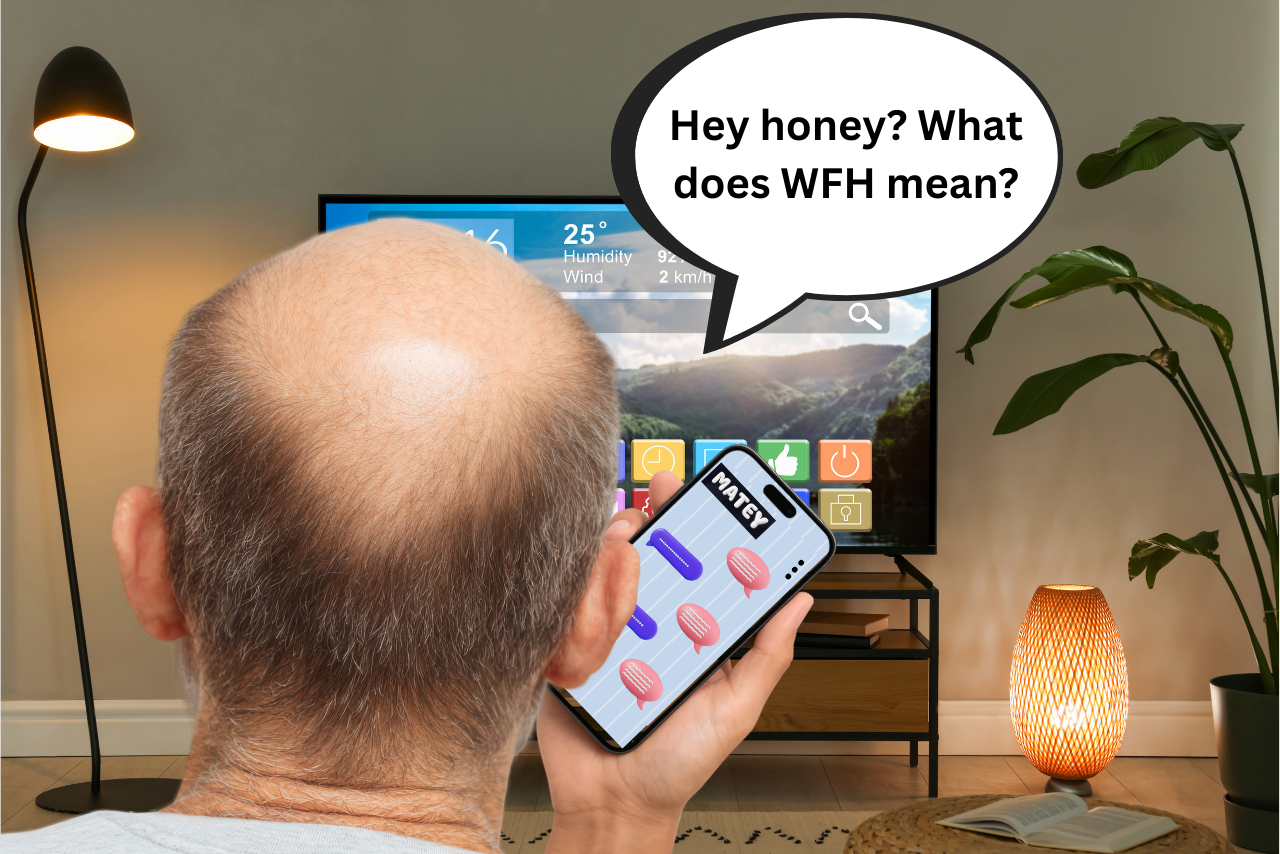
Acronym Confusion Baffles Text Users
For years, acronyms were my go-to in texting. People around my age understood the acronyms I used since many of us used them regularly. It’s useful for speeding up writing, but it may also confuse readers. Instead of saving time, text phrases could make individuals spend more time figuring out what they actually mean.
In fact, Google search results show that thousands of people look up the meanings of various acronyms every day. This result raises questions regarding the age range of those who use text abbreviations. People who are new to this texting style may be older, as it probably didn’t exist in their days.

Anna Spanish, a language education website, studied Google data to identify the most confusing texting phrases for Americans. Researchers developed a list of over 150 prominent acronyms, divided into five categories: dating, gaming, business, technology, and general.
They then examined the frequency of searches for each solo acronym paired with keywords such as “SMH meaning”, “what does SMH mean”, “what does SMH stand for”, and “SMH definition”. For years, I’ve used this particular abbreviation while messaging. So there’s no room for confusion on this one.
Unpacking The Popularity Of FWB, NSFW, and DTF In Modern Messaging
The results: FWB (Friends With Benefits) is the most perplexing texting word, with 577,190 Americans looking up its meaning each month.
The word has gained popularity in the digital age, with people regularly using it in texts and social media interactions to refer to casual sexual encounters between friends that do not include romantic commitment. In my opinion, this acronym should be considered age-restricted and only used by adults.
Coming in as the second most confusing texting phrase with 445,300 searches per month, or 5 million per year, is NSFW. It stands for ‘Not Safe for Work’ and is widely used online to signal that something is explicit and hence inappropriate to view or read in public. I’ve seen this term many times, but I always thought it stood for a brand or business. The arrangement of the words would look wonderful paired with a brand or a commercial building. Now that I know what it means, I’m surprised and need to adjust my thought process.

DTF (Down to F***) was discovered to be the third most confusing acronym, confusing 412,470 people each month as they seek clarification on this dating term. Another age-restricted and explicit phrase that should only be used by people of a certain age bracket.
SMH, OTP, and POV Acronyms Leave Many Text Users Stumped
SMH (Shaking My Head) was the fourth most confusing acronym, with 410,640 Americans scratching their heads to figure out what it meant. I assumed that most people were familiar with this one. But keep in mind that some individuals prefer to text with actual words. SMH is used when someone is disappointed or frustrated with a conversation or a person.
OTP (One True Pairing) is Googled around 380,590 times per month in the United States, ranking fifth on this list. This texting phrase is popular among fan circles, but its meaning may perplex outsiders. It is used to refer to a person’s favorite fictional romantic relationship.
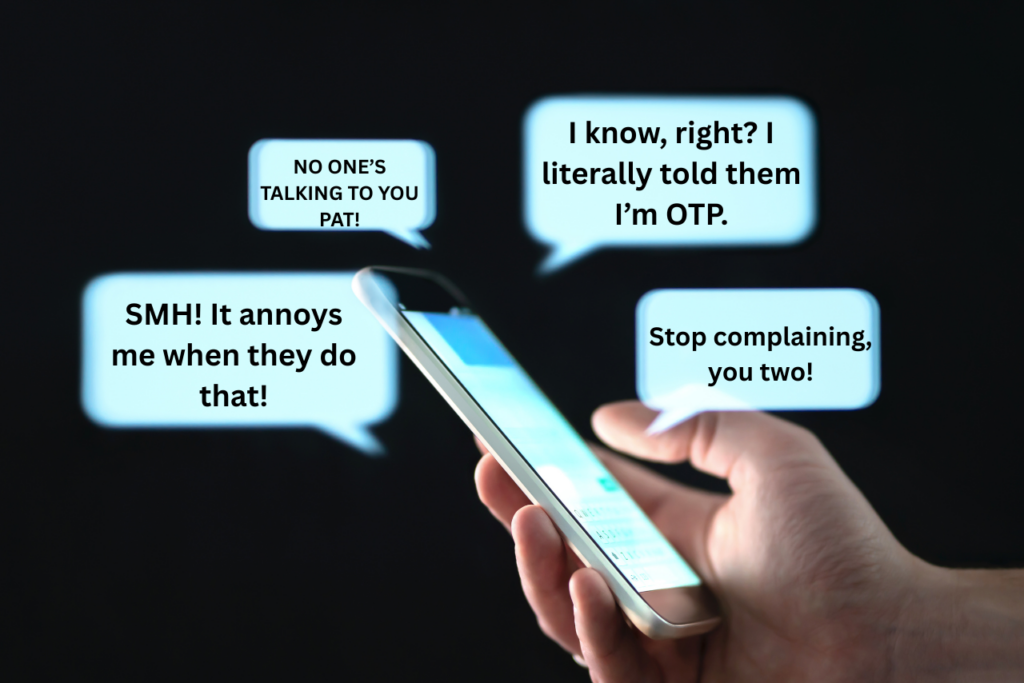
All this time, I assumed OTP stood for “On The Phone”. The only time I’ve used this abbreviation was to inform someone when I was talking on the phone. I had no idea that OTP stood for anything other than that. Every day, we learn something new!
POV ranked just behind OTP in terms of the most confused text words, with 380,590 queries every month. For years, content makers have used this word to define the camera’s “point of view”. I’ve seen POV used on several YouTube videos. So I was already aware of what it represented. However, on TikTok and other social media platforms, POV has grown beyond its conventional meaning, and some creators now use it in skits featuring people in unsettling or awkward situations.
What Do The Acronyms IMO, TLDR, FOMO, and HMU Actually Mean?
IMO (In My Opinion) is next on the list, with 216,850 monthly searches. It turns out this acronym ranked at the top of search results, indicating that many people are not as familiar with its meaning as one might think. I never used this acronym. In fact, every time I saw it, I thought of IMO, a free video calling app. As someone who learned numerous text phrases as a teenager, I can state that IMO was not used by me, my friends, or others in my life.
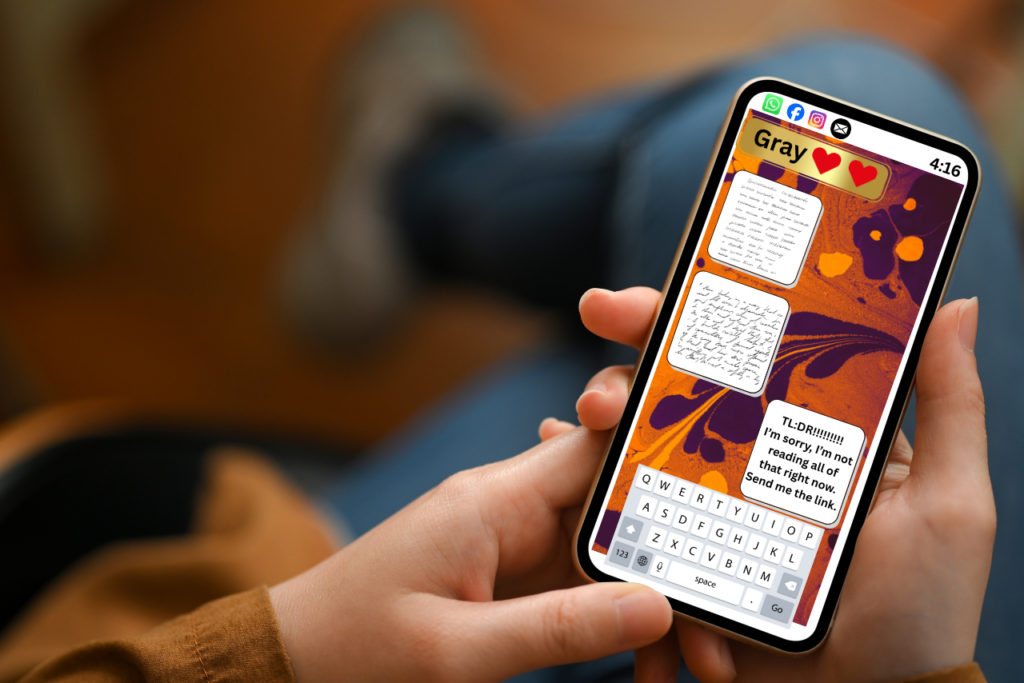
TL;DR (Too Long; Didn’t Read), with 166,170 searches, is another texting word for which Americans are searching the meaning of. As people’s attention spans shrink, the necessity for summaries becomes more evident, prompting them to seek out shorter versions of complex information. This acronym is unfamiliar to me. I’ve never come across this one. The arrangement of the letters inside the acronym seems unusual and is not one that most people use. I don’t know anybody who has ever used TL;DR in text.
FOMO (Fear of Missing Out) and HMU (Hit me Up) round out the top ten most puzzling acronyms for Americans, with 162,690 and 160,600 monthly searches, respectively. I first learned about the term FOMO in 2021, when one of my articles focused on the concept. HMU is largely used by many people, including myself. It’s a no-brainer!
From ISTG To TBT: Breaking Down Text Slang
Other intriguing terms people have looked for the meaning of include ISTG (I Swear to God), TBT (Throwback Thursday), PDA (Public Display of Affection), and TFW (That Feeling When). ISTG and TBT are both familiar to me, since I know people who have used ISTG several times. In terms of TBT, this texting phrase has appeared in the descriptions or hashtags of numerous videos on the internet and photographs depicting past events.
Spokesperson Says American English Is Evolving Faster Than Many Realize
A spokesperson for Anna Spanish commented on the findings:
American English is always changing, and it happens more often than you might think. You don’t have to go back centuries to see it. In just the last ten years, hundreds of changes have popped up. Some of them are because of new gadgets and tech stuff. Others happen because people start using words differently.
These shortcuts have made their way into all parts of our life, from talking at work to sending texts. You’ll see them a lot in US workplaces, among young folks, and in tech and gaming.